How to Make a Budget for Beginners: Step-by-Step Guide

Learning how to make a budget is the first step to taking control of your money. A budget is simply a plan for every dollar you earn: what goes to bills, what goes to life and what goes to your future. This beginner’s guide walks you through it in six steps, with a free template you can copy.
Quick answer
To make a budget: 1) find your monthly take-home pay, 2) list your fixed bills, 3) estimate variable spending, 4) set a savings amount, 5) compare income and spending and adjust, 6) track and review monthly. A simple starting point is the 50/30/20 rule.
How to make a budget in 6 steps
- Know your income: use take-home pay, after taxes and deductions. If income varies, use a low, realistic month.
- List fixed bills: rent, insurance, phone, loan minimums and subscriptions.
- Estimate variable spending: groceries, gas, dining out, shopping. Look at the last 2 to 3 months of statements.
- Set savings first: decide an amount for your emergency fund, retirement and goals, and automate it.
- Balance it: income minus spending and savings should be zero or positive. If not, cut variable spending first.
- Track and review: check once a week at first, then monthly.
Free budget template
| Category | Monthly amount (example) |
|---|---|
| Rent or mortgage | $1,300 |
| Groceries and food | $500 |
| Transportation | $350 |
| Utilities and phone | $250 |
| Insurance and health | $250 |
| Fun, shopping and other | $550 |
| Savings and extra debt payments | $800 |
| Total | $4,000 |
Budgeting methods
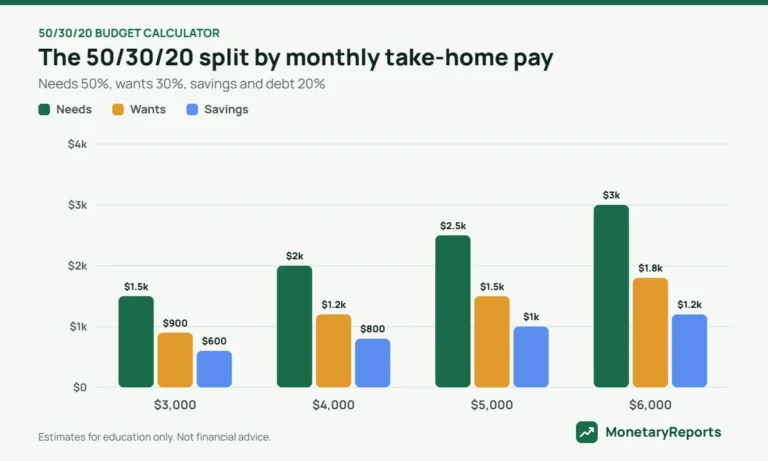
- 50/30/20: 50% needs, 30% wants, 20% savings. Try the 50/30/20 budget calculator.
- Zero-based budget: give every dollar a job until income minus planned spending equals zero.
- Envelope method: cash or digital “envelopes” for each category; when one is empty, you stop.
- Pay yourself first: save first, spend the rest. See pay yourself first.
How to stick to your budget
- Automate savings and bill payments.
- Use sinking funds for irregular bills.
- Leave a small “fun money” line so the budget feels realistic.
- Review monthly and adjust; a budget is a plan, not a punishment.
What making a budget means for you
- A budget turns vague worries into clear numbers.
- Start simple; you can add detail later.
- The best budget is the one you will actually use.
Frequently asked questions
What is the easiest way to make a budget?
Start with the 50/30/20 rule using your take-home pay, then adjust it to your real bills.
Should I budget with gross or net income?
With net (take-home) income, because that is the money you can actually spend.
How do I budget with irregular income?
Budget on a low month’s income and put anything extra into savings or a buffer account.
What apps can help me budget?
Many banks offer free tools; a simple spreadsheet also works well.
How often should I review my budget?
Weekly when you start, then monthly once it becomes a habit.
Related guides and calculators
Sources
This guide is for educational purposes only and is not financial advice. The figures are estimates before taxes, fees and inflation, and real rates, returns and rules change over time.