Gross vs Net Income: What’s the Difference? (Paycheck Example)
Gross vs net income: gross income is what you earn before anything is taken out; net income is what actually lands in your bank account. Knowing the difference matters for budgeting, loans and comparing job offers.
Quick answer
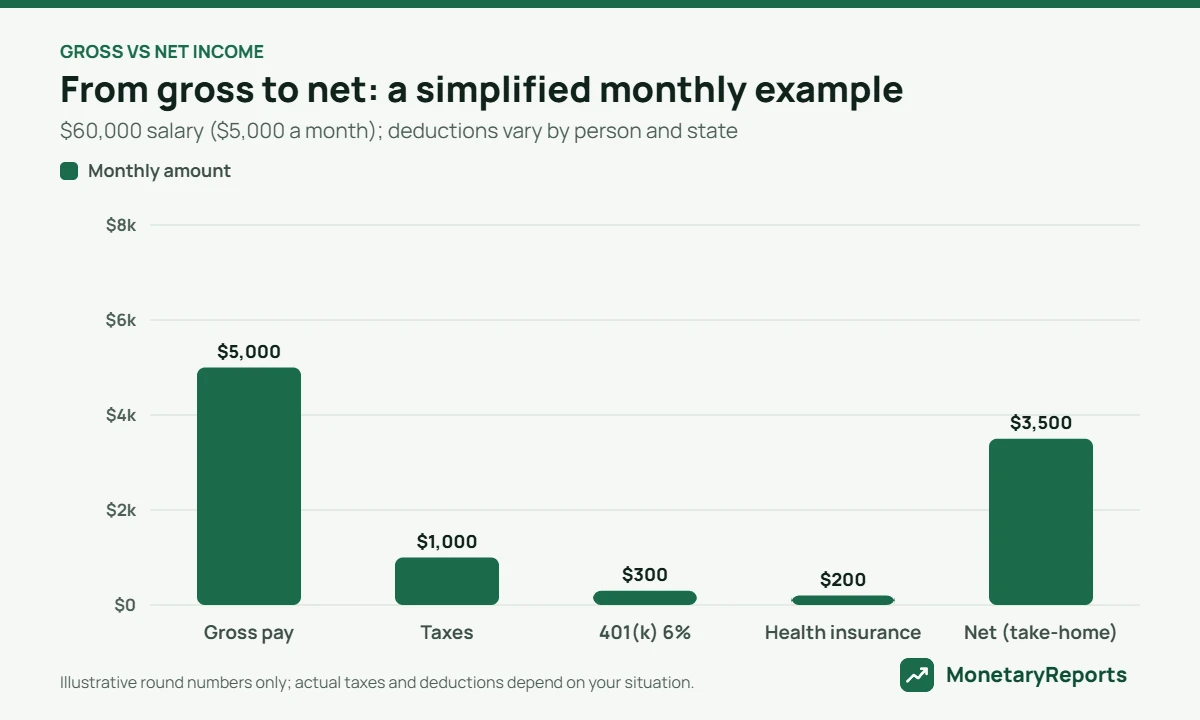
Gross income is your pay before taxes and deductions. Net income (take-home pay) is what is left after federal and state income taxes, Social Security and Medicare, retirement contributions and benefits. In a simplified example, $5,000 of gross monthly pay could become about $3,500 of net pay.
Gross vs net income at a glance
| Gross income | Net income | |
|---|---|---|
| What it is | Total pay before deductions | Pay after taxes and deductions |
| Where you see it | Job offer, salary, top of pay stub | Bank deposit, bottom of pay stub |
| Used for | Loan applications, tax brackets | Budgeting and spending plans |
What comes out of your paycheck
- Federal income tax (based on your W-4 and income).
- State and local income tax, if your state has one.
- FICA: Social Security (6.2% up to a yearly wage limit) and Medicare (1.45%).
- Pre-tax deductions: traditional 401(k), health insurance, HSA or FSA.
- Other deductions: Roth 401(k), union dues, wage garnishments.
A simplified example
| $60,000 salary, monthly | Amount |
|---|---|
| Gross pay | $5,000 |
| Income taxes and FICA (example) | −$1,000 |
| 401(k) contribution (6%) | −$300 |
| Health insurance | −$200 |
| Net (take-home) pay | $3,500 |
When to use gross vs net
- Budgeting: use net income; it is what you can spend. Try the 50/30/20 budget calculator.
- Loans and rent applications: lenders and landlords usually ask for gross income.
- Comparing job offers: compare gross pay and the value of benefits, then estimate take-home.
- Savings rate: be consistent; many people use gross income for retirement targets.
What gross vs net income means for you
- Your budget should start from net pay.
- Pre-tax 401(k) contributions lower your taxes, so take-home pay drops by less than the contribution.
- Check your pay stub once a year for errors.
Frequently asked questions
What is the difference between gross and net income?
Gross income is before taxes and deductions; net income is what you take home.
Is my salary gross or net?
A quoted salary is almost always gross.
How do I calculate my net income?
Subtract taxes and deductions from gross pay, or simply look at the net amount on your pay stub.
Should I budget with gross or net income?
With net income, because that is the money you actually receive.
What percentage of gross pay is take-home pay?
It varies a lot by income, state and benefits; many people take home roughly 65% to 80% of gross pay.
Related guides and calculators
- Hourly to salary calculator
- How to make a budget for beginners
- 50/30/20 budget calculator
- 401(k) employer match explained
Sources
This guide is for educational purposes only and is not financial advice. The figures are estimates before taxes, fees and inflation, and real rates, returns and rules change over time.