Money Habits in Your 20s: What to Do Now to Build Wealth
The money habits in your 20s matter more than the size of your paycheck. Time is your biggest asset: small, consistent habits started now can grow into large results by your 40s and beyond. Here are ten habits that build wealth, with the numbers behind them.
Quick answer
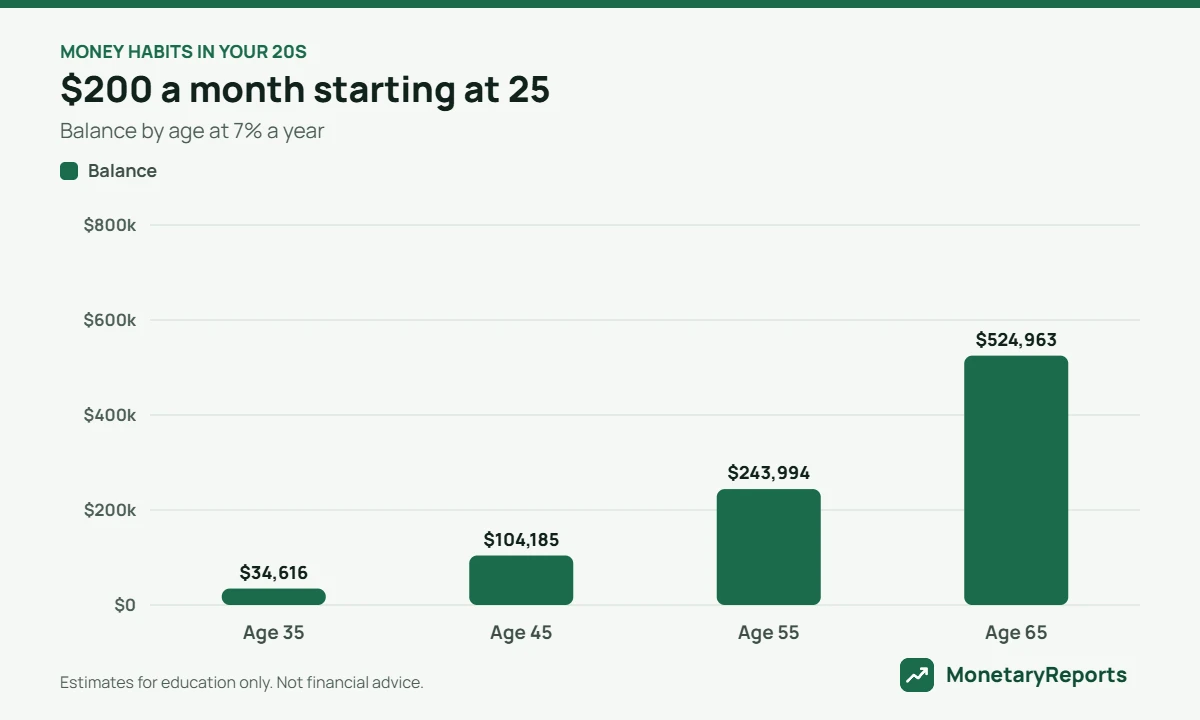
The most powerful money habits in your 20s are: save automatically, build an emergency fund, get the 401(k) match, avoid high-interest debt and invest early. $200 a month from 25 at 7% can grow to about $524,963 by 65.
10 money habits in your 20s
- Pay yourself first: automate saving on payday.
- Build an emergency fund: start with $1,000, then 3 months of expenses.
- Get the full employer match in your 401(k).
- Open a Roth IRA: your tax rate is often lower now than later.
- Pay credit cards in full every month.
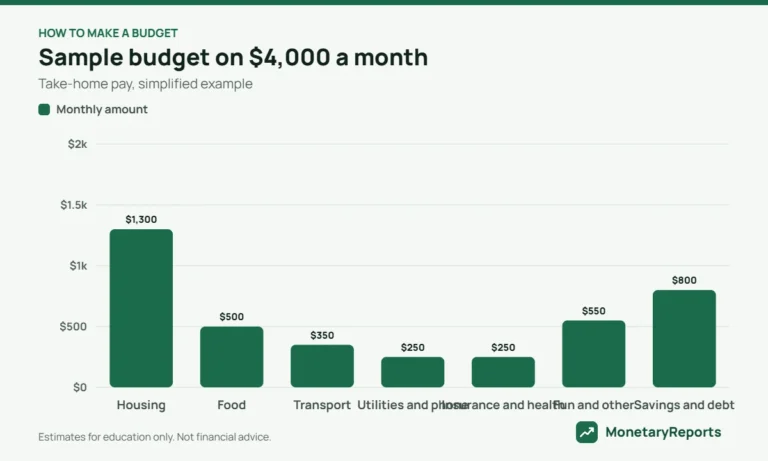
- Track your spending for a month and make a simple budget.
- Raise your savings rate with every raise.
- Keep fixed costs low: rent and car payments shape everything else.
- Invest in low-cost, diversified funds for long-term goals.
- Learn the basics: compound interest, inflation and APR vs APY.
Why starting in your 20s matters
| $200 a month at 7% from 25 | Balance |
|---|---|
| Age 35 | $34,616 |
| Age 45 | $104,185 |
| Age 55 | $243,994 |
| Age 65 | $524,963 |
Starting the same plan at 35 gives about $243,994 at 65, less than half. See starting to save at 25 vs 35.
Mistakes to avoid
- Carrying credit card balances.
- Financing expensive cars with long loans.
- Lifestyle creep: spending every raise.
- Waiting to invest until you “earn more”.
- Cashing out a 401(k) when changing jobs.
What money habits in your 20s mean for you
- Habits beat income: automate the right things once.
- Small amounts now beat large amounts later.
- Focus on progress, not perfection.
Frequently asked questions
How much should I save in my 20s?
Many guidelines suggest 15% of income for retirement including any match, plus an emergency fund. If that is too much, start smaller and increase it.
Should I invest or pay off student loans in my 20s?
Get the employer match first; then compare the loan rate with expected returns. High-interest debt usually comes first.
Is it too late to start at 29?
Not at all. Starting before 30 still gives decades of compound growth.
Do I need a lot of money to invest?
No. Many brokers have no minimums and allow fractional shares.
What is the most important money habit?
Saving automatically, because it makes every other goal easier.
Related guides and calculators
Sources
- Investor.gov (U.S. SEC): Compound interest calculator
- IRS: Retirement plans
- Consumer Financial Protection Bureau (CFPB)
- MonetaryReports: How we calculate
This guide is for educational purposes only and is not financial advice. The figures are estimates before taxes, fees and inflation, and real rates, returns and rules change over time.