Treasury Bills vs CDs vs Savings Accounts: Side-by-Side Comparison

Treasury bills vs CDs vs savings accounts: all three are low-risk places for cash, but they differ in access, rate type and taxes. This guide compares them side by side so you can choose the right home for each part of your savings.
Quick answer
Savings accounts give instant access with a variable rate. CDs lock a rate for a term. Treasury bills are short-term U.S. government debt whose interest is exempt from state and local income tax. With the same 4.5% rate, a T-bill can leave you more after tax if you live in a state with income tax.
Treasury bills vs CDs vs savings at a glance
| Savings account | CD | Treasury bill | |
|---|---|---|---|
| Issued by | Bank or credit union | Bank or credit union | U.S. Treasury |
| Safety | FDIC/NCUA insured up to the limit | FDIC/NCUA insured up to the limit | Backed by the U.S. government |
| Rate | Variable | Fixed for the term | Fixed (sold at a discount) |
| Access | Anytime | At maturity (penalty before) | At maturity, or sell before through a broker |
| State income tax on interest | Yes | Yes | No |
| Typical terms | None | 3 months to 5 years | A few weeks up to 52 weeks |
The tax difference
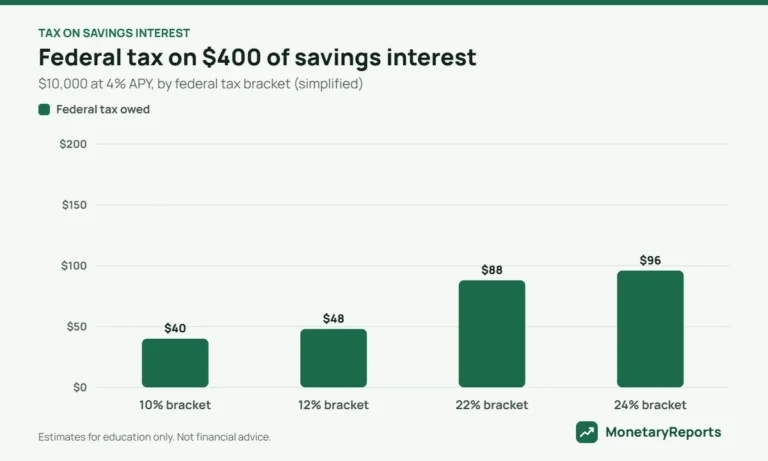
| $10,000 at 4.5% for 1 year | Interest | Federal tax (22%) | State tax (5%) | After tax |
|---|---|---|---|---|
| Savings account | $450 | $99 | $22.50 | $328.50 |
| CD | $450 | $99 | $22.50 | $328.50 |
| Treasury bill | $450 | $99 | $0 | $351.00 |
How Treasury bills work
T-bills are sold at a discount to their face value. For example, you might pay a bit less than $1,000 and receive $1,000 at maturity; the difference is your interest. You can buy them at TreasuryDirect.gov or through most brokers, which also let you sell before maturity if needed (the price may be higher or lower than what you paid).
Which one to use
- Emergency fund: high-yield savings account.
- Money for a known date within a year: T-bills or a short CD.
- Money you want to lock for 2 to 5 years: longer CDs or Treasury notes.
- High state income tax: T-bills often come out ahead at the same rate.
What this means for you
- Compare after-tax returns, not just headline rates.
- All three are low risk; the main differences are access, rate type and taxes.
- Mixing them by goal is common and sensible.
Frequently asked questions
Are Treasury bills safer than CDs?
Both are very safe. T-bills are backed by the U.S. government; CDs at insured banks are protected up to the insurance limit.
Do I pay taxes on T-bill interest?
Yes, federal income tax applies, but T-bill interest is exempt from state and local income taxes.
Can I lose money on T-bills?
If held to maturity, you receive the full face value. Selling early can bring a gain or a loss depending on rates.
Where do I buy Treasury bills?
At TreasuryDirect.gov or through a brokerage account.
Which pays the most?
It changes over time. Compare current T-bill yields, CD APYs and savings APYs, after taxes.
Related guides and calculators
- CD vs high-yield savings account
- CD ladder explained
- Is interest on savings taxable?
- What happens to your savings when the Fed cuts rates?
Sources
- TreasuryDirect: Treasury bills
- FDIC: National rates and rate caps
- IRS: Topic 403, Interest received
- MonetaryReports: How we calculate
This guide is for educational purposes only and is not financial advice. The figures are estimates before taxes, fees and inflation, and real rates, returns and rules change over time.