Retiring at 55 vs 65: How Much More Money You Need

Retiring at 55 vs 65 is a big difference: ten fewer years to save, ten more years to fund, and a gap before Medicare and full Social Security. This guide shows how much more you need to retire at 55 and the rules that matter.
Quick answer
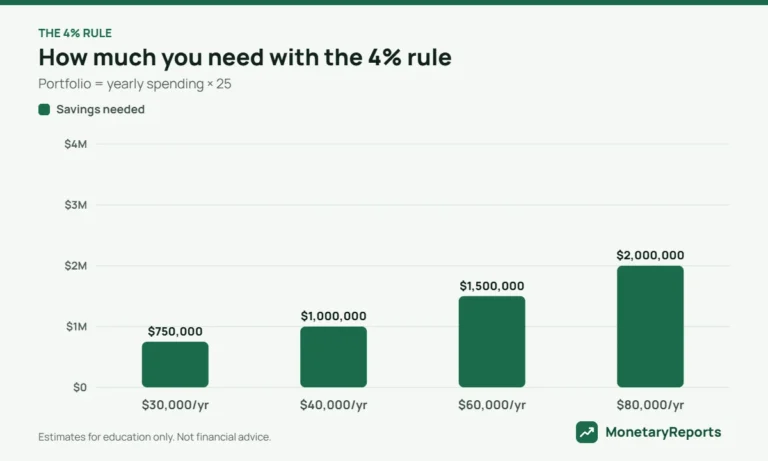
To spend $40,000 a year from savings, retiring at 65 with the 4% rule needs about $1,000,000; retiring at 55 with a safer 3.5% rate needs about $1,142,857. Starting at 30 at 7%, that is roughly $555 a month for 65 vs $1,411 a month for 55.
Retiring at 55 vs 65: the numbers
| Retire at 55 | Retire at 65 | |
|---|---|---|
| Savings target for $40,000/yr | $1,142,857 (3.5%) | $1,000,000 (4%) |
| Years saving from 30 | 25 | 35 |
| Monthly saving needed (7%) | about $1,411 | about $555 |
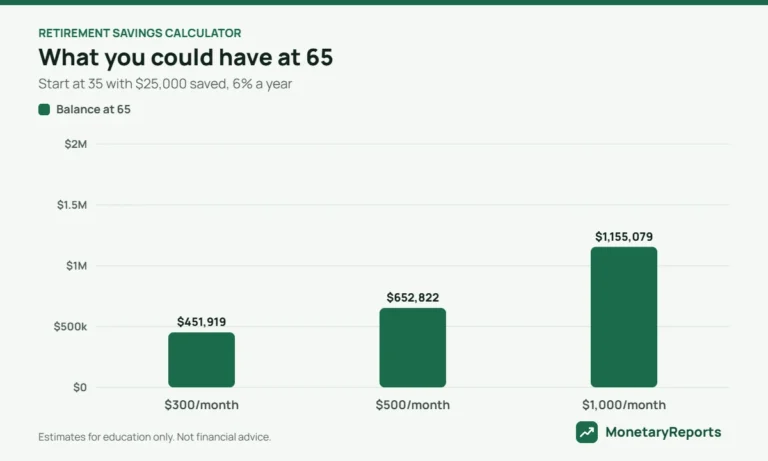
| $1,000/month from 30 grows to | $810,072 | $1,801,055 |
| Years to fund before 65 | 10 | 0 |
Why 55 costs so much more
- Fewer saving years: 25 instead of 35, and the last decade is when compounding adds the most.
- Longer retirement: money may need to last 40 years, so a lower withdrawal rate is safer.
- No Medicare until 65: health insurance can be a major cost.
- Social Security later: benefits start at 62 at the earliest, reduced, and full retirement age is 67 for people born in 1960 or later.
Rules and gaps to plan for
- Withdrawals from retirement accounts before 59½ can face a 10% penalty plus tax, with exceptions.
- The “rule of 55” can allow penalty-free withdrawals from your current employer’s 401(k) if you leave that job in or after the year you turn 55.
- Taxable brokerage accounts and Roth contributions can bridge the gap until 59½.
Ways to make early retirement possible
- Raise your savings rate as early as possible.
- Lower expected spending: it shrinks the target.
- Consider part-time work in your late 50s.
- Build a bridge account outside retirement plans.
- Plan health insurance costs carefully.
What retiring at 55 vs 65 means for you
- Every year you retire earlier both shortens saving and lengthens spending.
- Early retirement is possible, but it needs a high savings rate and careful planning.
- Check your estimated Social Security at ssa.gov.
Frequently asked questions
How much do I need to retire at 55?
Often 28 to 30 times your yearly spending from savings, because the money may need to last 40 years.
Can I withdraw from my 401(k) at 55?
Possibly, under the rule of 55 if you leave your job in or after the year you turn 55. Rules vary by plan.
When can I get Social Security?
As early as 62 with a permanent reduction; full benefits at your full retirement age (67 for those born in 1960 or later).
What about health insurance before 65?
Options include an employer retiree plan, COBRA for a limited time or marketplace plans. Budget for it carefully.
Is retiring at 60 a good compromise?
For many people, yes: fewer years to fund and more years to save than at 55.
Related guides and calculators
Sources
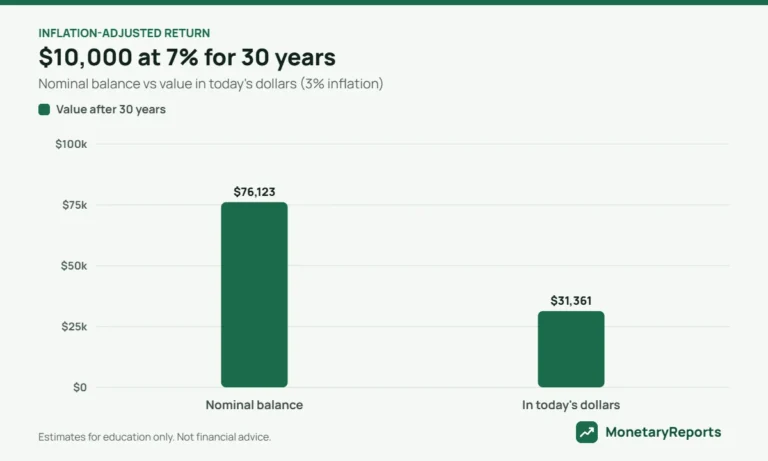
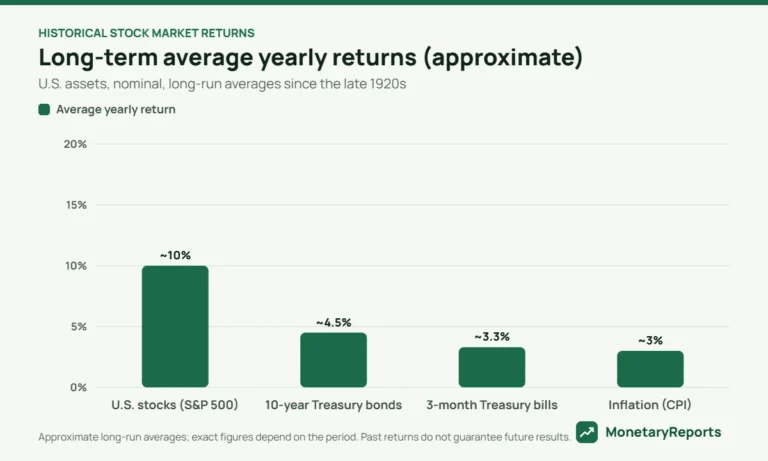
This guide is for educational purposes only and is not financial advice. The figures are estimates before taxes, fees and inflation, and real rates, returns and rules change over time.