How Much Do I Need to Retire? The 4% Rule Explained

How much do you need to retire? The 4 percent rule is the most popular shortcut: withdraw 4% of your savings in the first year of retirement, then adjust that dollar amount for inflation each year. It implies you need about 25 times your yearly spending. Here is how it works, where it comes from and its limits.
Quick answer
With the 4 percent rule, you need about 25 × your yearly spending. To spend $40,000 a year from savings, you need about $1,000,000. In year one you withdraw $40,000, then you raise it with inflation, for example to $41,200 if prices rise 3%.
How the 4 percent rule works
- Add up your savings at retirement, for example $1,000,000.
- Withdraw 4% in year one: $40,000.
- Each following year, increase the withdrawal by inflation, regardless of market performance.
- Historically, this approach lasted at least 30 years in most past market periods for a balanced stock and bond portfolio.
How much you need
| Yearly spending from savings | Savings needed (× 25) |
|---|---|
| $30,000 | $750,000 |
| $40,000 | $1,000,000 |
| $60,000 | $1,500,000 |
| $80,000 | $2,000,000 |
Where the rule comes from
Financial planner William Bengen published research in 1994 testing withdrawal rates against historical U.S. market returns. A later study by three professors at Trinity University (1998), known as the Trinity Study, reached similar conclusions. The 4% figure was the highest rate that survived 30-year retirements in almost all past periods tested.
Limits of the 4 percent rule
- Time frame: it was tested for about 30 years. Early retirees may want 3% to 3.5%.
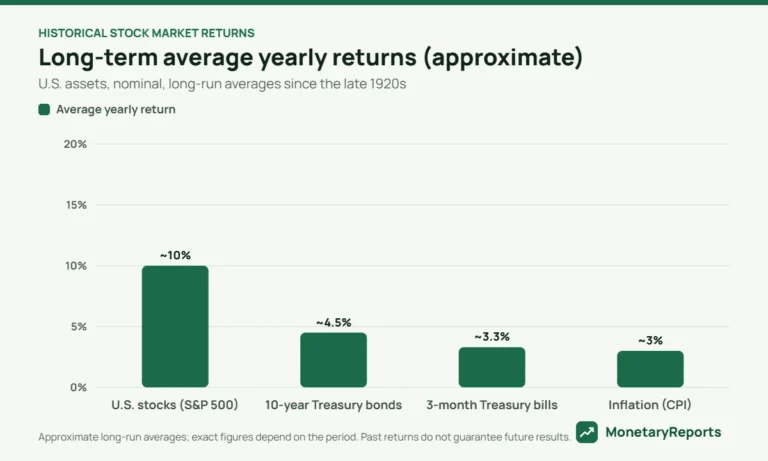
- Past returns: future markets may be weaker or stronger than history.
- Rigid spending: real retirees often spend less in bad years, which improves the odds.
- Fees and taxes: they reduce what you can safely withdraw.
What the 4 percent rule means for you
- Use it as a starting point to estimate your target, not as a guarantee.
- Subtract expected Social Security from your spending before multiplying by 25.
- Being flexible with spending in down years makes any plan safer.
Frequently asked questions
What is the 4 percent rule?
A guideline that you can withdraw 4% of your savings in the first year of retirement and adjust for inflation afterwards, with a high chance the money lasts 30 years based on history.
How much do I need to retire with the 4% rule?
About 25 times the yearly spending you need from savings.
Is the 4 percent rule still valid?
Many planners still use it as a rule of thumb, while some suggest a lower rate for long retirements or when expected returns are low.
Does the 4% rule include Social Security?
No. Subtract the income you expect from Social Security or pensions, then apply the rule to what is left.
What is a safe withdrawal rate for early retirement?
Many early retirees plan for 3% to 3.5%, because their money may need to last 40 years or more.
Related guides and calculators
- FIRE number calculator
- Retirement savings calculator
- Retiring at 55 vs 65
- Historical stock market returns
Sources
- Social Security Administration
- Investor.gov (U.S. SEC): Compound interest calculator
- MonetaryReports: How we calculate
This guide is for educational purposes only and is not financial advice. The figures are estimates before taxes, fees and inflation, and real rates, returns and rules change over time.