CD vs High-Yield Savings Account: Pros, Cons and Which Wins

CD vs high-yield savings: both are safe, insured places to earn interest, but they work differently. A CD locks your money and your rate for a fixed term. A high-yield savings account lets you withdraw anytime, but its rate can change. Which is better depends on when you will need the money and where rates are heading.
Quick answer
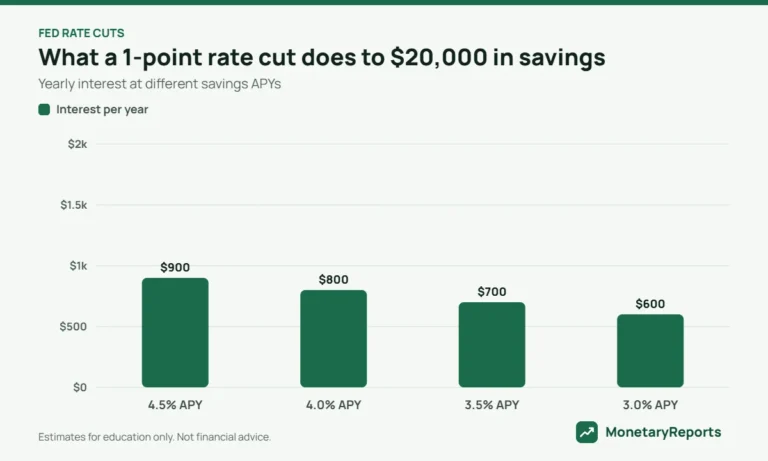
Choose a CD for money you will not touch until a known date and when you want to lock a rate. Choose a high-yield savings account for your emergency fund and any money you may need soon. Example: $20,000 earns $900 in a 1-year CD at 4.5%, but only $700 in savings if its rate drops to 3.5%.
CD vs high-yield savings at a glance
| CD | High-yield savings account | |
|---|---|---|
| Rate | Fixed for the term | Variable, can change anytime |
| Access | Locked until maturity (penalty to withdraw early) | Withdraw anytime |
| Adding money | Usually not after opening | Anytime |
| Insurance | FDIC/NCUA up to the limit | FDIC/NCUA up to the limit |
| Best for | Known future expenses, locking rates | Emergency fund, short-term savings |
What happens when rates change
If rates fall, the CD wins because its rate is locked. If rates rise, the savings account wins because its rate can go up, while the CD stays stuck. Nobody knows for sure which way rates will go, which is why many people use both.
Which one is right for you?
- High-yield savings if the money is your emergency fund, you might need it within a year, or you plan to add money regularly.
- CD if you have a lump sum for a date you know (a tuition bill, a down payment next year) and want certainty.
- CD ladder if you want CD rates with regular access. See CD ladder explained.
Using both
A common setup is to keep 3 to 6 months of expenses in high-yield savings and put extra cash for known goals into CDs that mature when you need the money. Compare both with Treasury bills, which can be attractive in states with high income taxes.
What CD vs high-yield savings means for you
- Never lock your emergency fund in a CD.
- Match CD terms to the date you need the money.
- Compare APYs, fees and penalties, not just the headline rate.
Frequently asked questions
Is a CD better than a high-yield savings account?
Not always. A CD is better if you want a locked rate and will not need the money; savings is better for flexibility.
Can I lose money in a CD?
Not at an insured bank within the limit, but early withdrawal penalties can reduce your interest.
Do high-yield savings rates go down?
They can. They usually move with the Federal Reserve’s rate decisions. See what happens to your savings when the Fed cuts rates.
Which pays more, a CD or savings?
It depends on current offers. Sometimes short CDs pay more; sometimes high-yield savings pays about the same with full flexibility.
Are both insured?
Yes, at FDIC-insured banks and NCUA-insured credit unions, up to $250,000 per depositor, per institution, per ownership category.
Related guides and calculators
- CD calculator
- High-yield savings account calculator
- CD ladder explained
- Treasury bills vs CDs vs savings accounts
Sources
This guide is for educational purposes only and is not financial advice. The figures are estimates before taxes, fees and inflation, and real rates, returns and rules change over time.